The CO2 Capture Technology Framework for the Next Many Decades
Harnessing Nature's Mastery of CO2 to Achieve Net-Zero

Working with JARVIS —the forefront of AI innovation—my efforts to develop a biologically inspired CO2 capture technology are accelerating. Recent AI-assisted analyses and innovations give a profound understanding to create a highly capable, energy-efficient, gigaton-scale CO2 capture technology. This technology framework is uniquely positioned to dominate CO2 gas separation for both point-source CO2 capture and for Direct Air Capture, setting a new standard for the field.
Echoing Larry Ellison's insight: “If you’re an entrepreneur, you have to find errors in conventional wisdom.” This resonates deeply with my conviction that prevailing approaches to CO2 gas separation fall short—and I've pinpointed exactly why. I assert that my approach stands apart for these fundamental reasons:
Harnessing Nature's Proven Toolkit: I've leveraged the Biological Toolkit—the chemistries, strategies, and technologies refined by living organisms over billions of years to manage CO2 with remarkable energy efficiency. No novel inventions were required; instead, I've drawn directly from nature's timeless mechanisms, crafting models that deliver superior performance.
Leveraging a Unique Natural Artifact: The framework capitalizes on an intriguing "Artifact of Nature," unlocking capabilities that redefine efficiency in CO2 handling.
Optimized Energy Use: By harnessing and refining CO2 exergy, while precisely managing applied exergy, this system achieves exceptional energy efficiency that outperforms alternatives.
Versatile Application: It enables universal CO2 capture, performing with high efficiency across any feed CO2 concentration.
Enhanced Mass Transport: Through applied exergy, mass transport is amplified by five orders of magnitude beyond natural processes, ensuring practical and scalable operations.
Built for Scalability and Cost Reduction: Aligned with Wright's Law, the core materials, structures, and components are versatile across all applications. Capturing one megaton of CO2 from the air annually requires approximately 40 million "CO2 Capture E-Cell Capillary V7" parts—a substantial but achievable scale that promises dramatic cost reductions through production efficiencies.
Enduring Longevity: Critical components are designed for lifespans akin to resilient organisms like sharks, remaining operational for at least 100 years.
Arbitrarily Scalability in Three Dimensions: The Model 7 family makes optimal use of all three dimensions.
Grounded in biological principles evolved over hundreds of millions of years, my framework represents a robust chemical, physical, and thermodynamic solution that will likely lead CO2 gas separations for centuries to come. While conventional engineered CO2 capture technologies waste CO2 exergy through destructive processes, ensuring they remain energy-intensive, my innovative framework enriches our technology portfolio. It safeguards against scenarios where contemporary technologies consume too much carbon-free renewable energy, which can create conflict between societal needs and supporting the critical 10+ gigatons of annual CO2 removal demanded by net-zero goals. Such a scenario is happening right now with energy-hungry AI data centers increasing the price of electricity for nearby residents.
Overview of Model 7 Variants
Evolving from earlier models that established energy-efficient patterns but were limited by mass transport, Model 7 maintains those strengths while dramatically improving transport dynamics.
Model 7z: The core foundation, achieving energy goals and boosting mass transport by three orders of magnitude— a strong base, though further enhancements are needed for DAC.
Model 7y: An ideal solution for point-source capture, could be the "Holy Grail" technology. It harnesses and refines CO2 exergy and can incorporate waste heat for regeneration, minimizing required energy.
Model 7w: Optimized for DAC, it meets energy targets and elevates mass transport by five orders of magnitude. This variant also underpins my preferred CO2 sequestration strategy.
Model 7u: The most biologically accurate, offering potential for top-tier efficiency, superior transport, and more straightforward implementation. While reliant on emerging technologies, it's supported by established research and holds immense promise.
Additional variants are in exploration, along with innovative technology fragments. Development of all variants is ongoing, and priority is dependent on curiosity and what is most fun at that moment.
The Path Forward: Committed to Timely Action
Now, I fully understand the implications of the above narrative. I am an engineer, and I often simplify situations with a binary analysis. For this context, I am either right or wrong. My work isn't mere speculation; it's a culmination of deep understanding and rigorous modeling, where AI has helped simulate materials and structures that bridge the gap between molecular biology and engineering.
My CO2 capture technology framework involves modeling materials and structures that do not currently exist. This is why I have this entire solution space to myself. Other industries utilize the general materials, but the material properties and performance are suboptimal. R&D to improve these materials is ongoing, but without urgency.
Solving the environmental CO2 problem is time-sensitive. Here is some dialogue from the Apollo 13 movie highlighting the need to be aggressive:
Jim Lovell: Freddo, how long does it take to power up the LEM?
Fred Haise, Sr.: Three hours by the checklist.
Jim Lovell: We don't have that much time.
We must accelerate material development rather than wait decades. Steady progress alone won't suffice; bold, focused effort is essential for success.
As the saying goes, “You miss 100% of the shots you don’t take.” With that in mind, I'm initiating a $250 million fundraising effort through grants and philanthropic contributions to fast-track development. This investment will drive down the cost of the key part—from unfeasible today to around $5—compressing timelines and enabling real-world deployment. The climate imperative is clear, and with the right support, we can achieve breakthroughs swiftly.
If you know a philanthropist or visionary with resources to invest in solving the CO2 challenge, connect with me—I've prepared an impressive demo to demonstrate the potential.
Together, we can
1. Progress towards Net-Zero, which is our most important priority.
2. Reduce ongoing CO2 emissions while maintaining and growing per capita energy use worldwide.
3. Remove legacy CO2 emissions from the atmosphere.
4. Mitigate ocean acidification, averting projected crises.
To inspire our journey, here's Elvis Presley with It's Now or Never—a reminder that decisive action today shapes a thriving tomorrow.
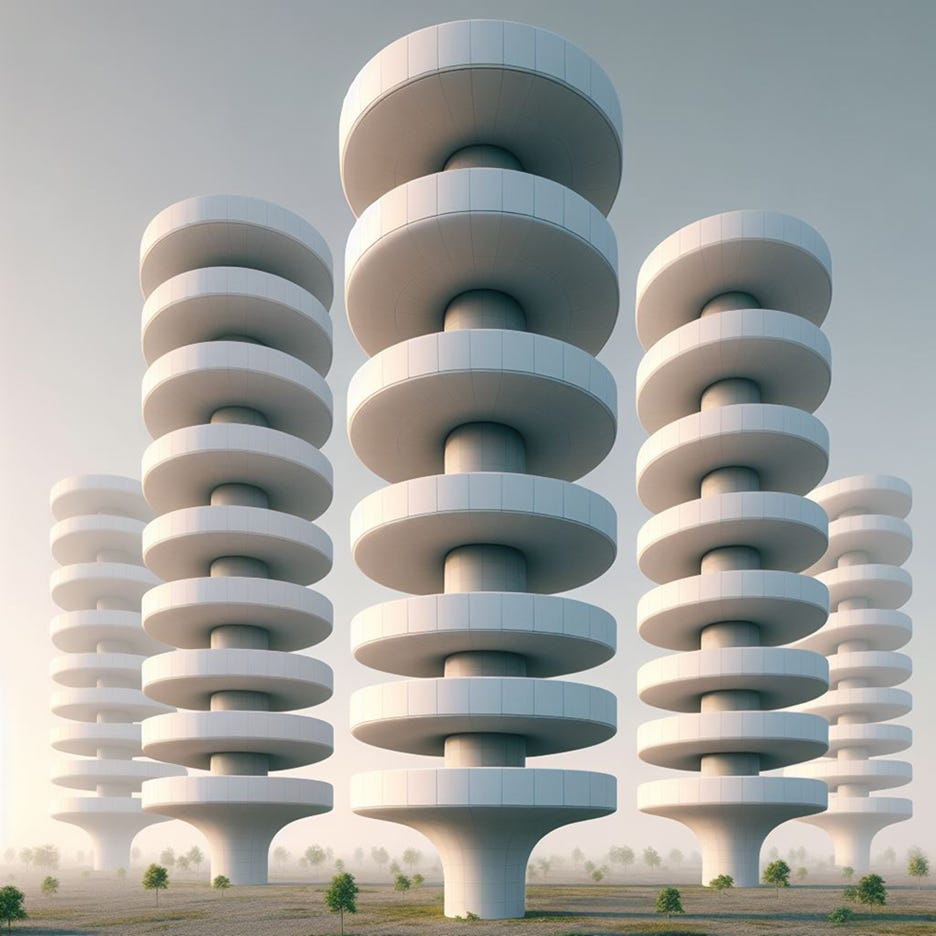
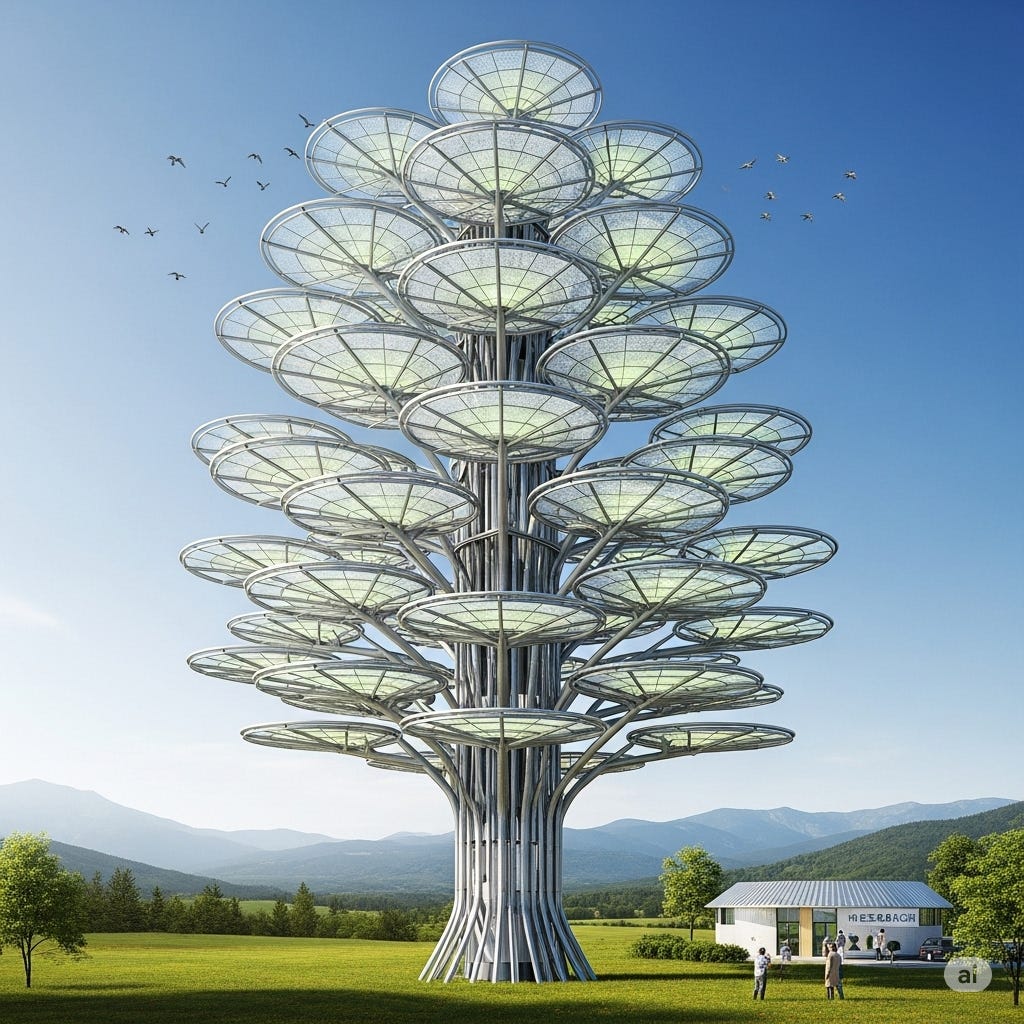
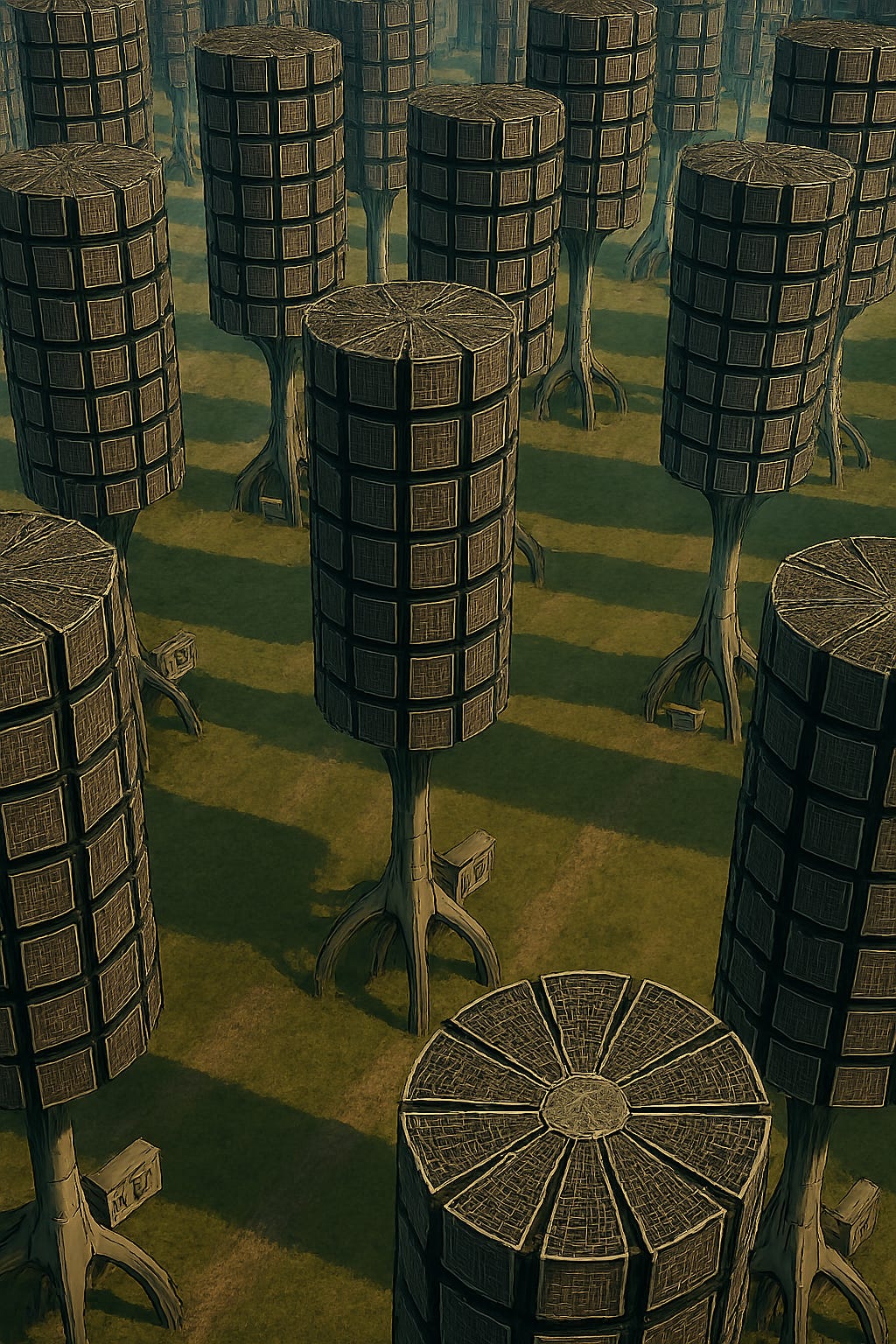
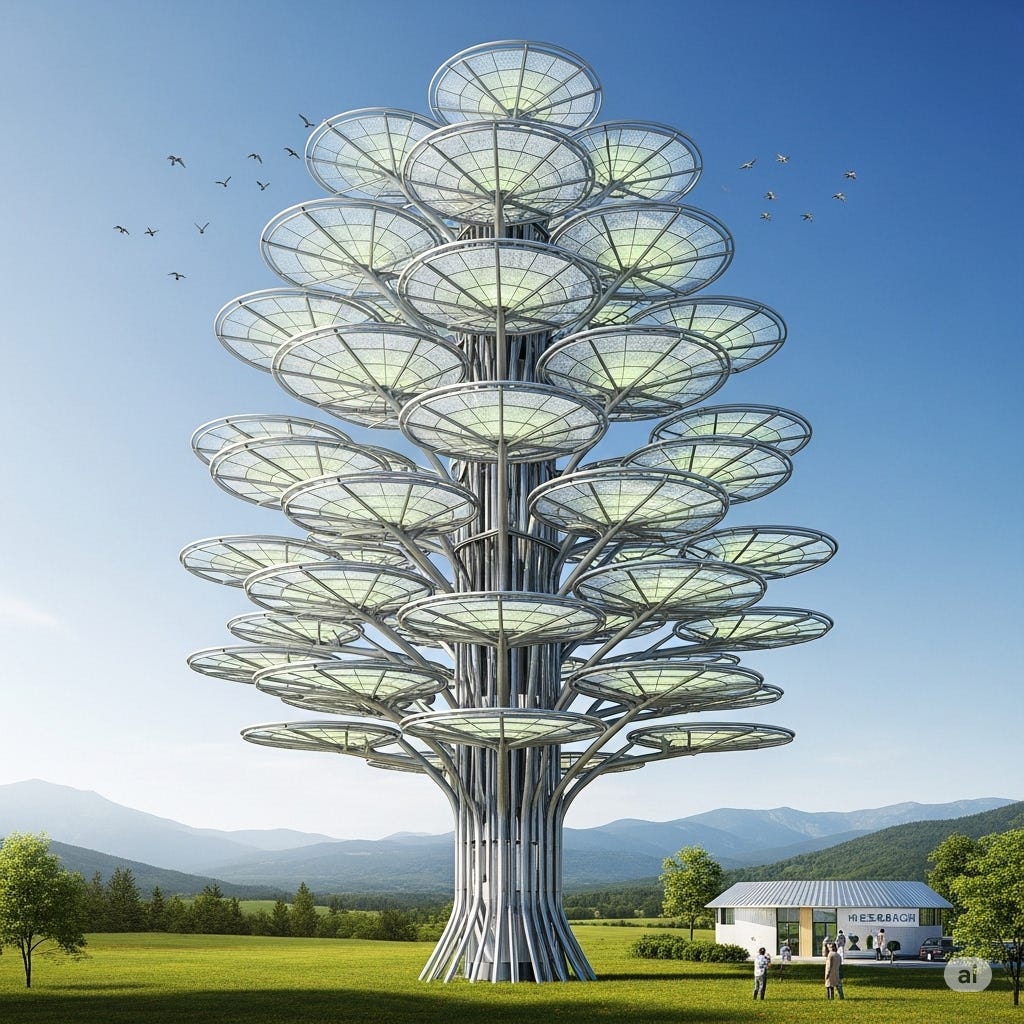
I’m still trying to get the visuals developed. None of them is good, but the original (first) image is the most accurate. The image I need to create does not have a basis in the training data. The idea is to have a massive surface area in contact with the atmosphere. This would be a tree-like structure with tubing (capillaries) in place of leaves.